The Architecture of a Coat
Seventeen pattern pieces, four fittings, and one shoulder that has to be exactly right.

A coat is the only garment that has to work while doing nothing. It hangs on a body, in the cold, over clothes you already chose, and it either gives that outfit a spine or it does not. There is very little middle ground.
Our outerwear starts with the shoulder. Too soft and the coat collapses; too structured and it looks like a uniform. We build a light canvas into the yoke — never a full pad — so the line holds without the garment feeling borrowed from a boardroom.
The fitting room ledger
- Fit one: proportion and hem — where the coat ends relative to the leg
- Fit two: sleeve pitch, the angle at which the arm hangs naturally
- Fit three: closure and drape, tested walking and seated
- Fit four: lining, weight, and the sound the fabric makes when it moves
If you can hear the coat before you see it, we have used too much fabric.
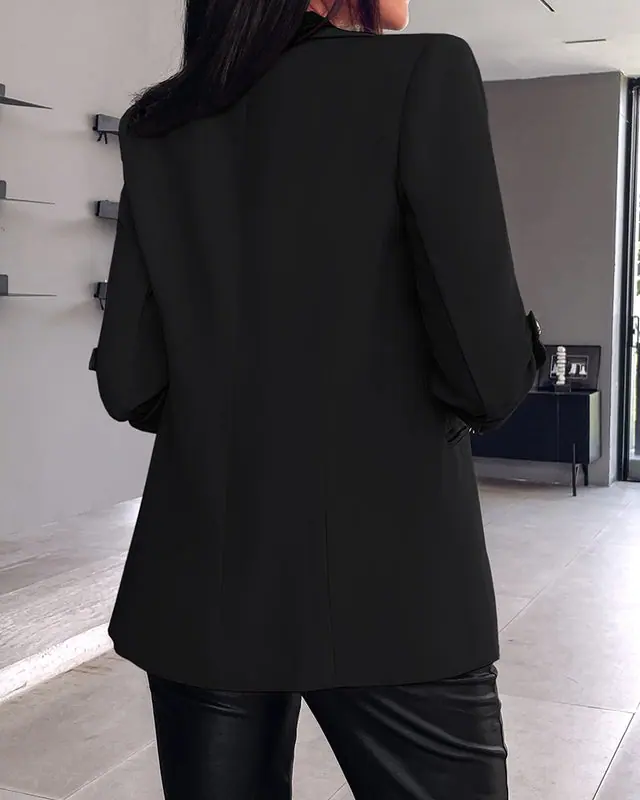
The result is a small collection of six outer layers: a wool-blend longline coat, a cropped suede jacket, a double-breasted blazer with a softened lapel, and three pieces that sit between categories. All of them are designed to be worn open as often as closed.
Care, briefly
Brush rather than wash. Hang on a broad shoulder. Let it rest a day between wears, and it will keep its shape for years — which is, after all, the only sustainable argument that has ever held up.
Pieces mentioned
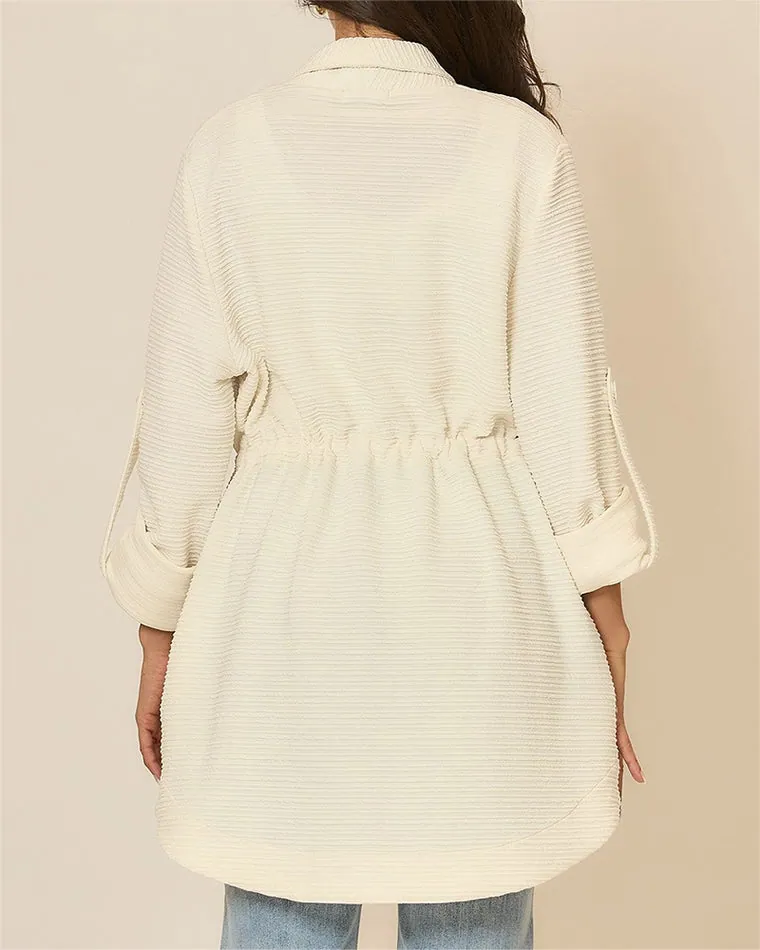

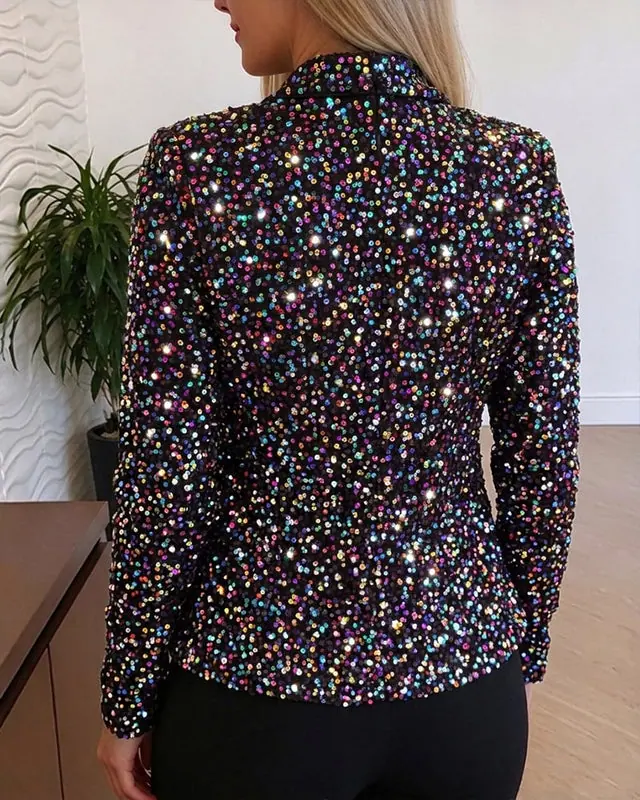

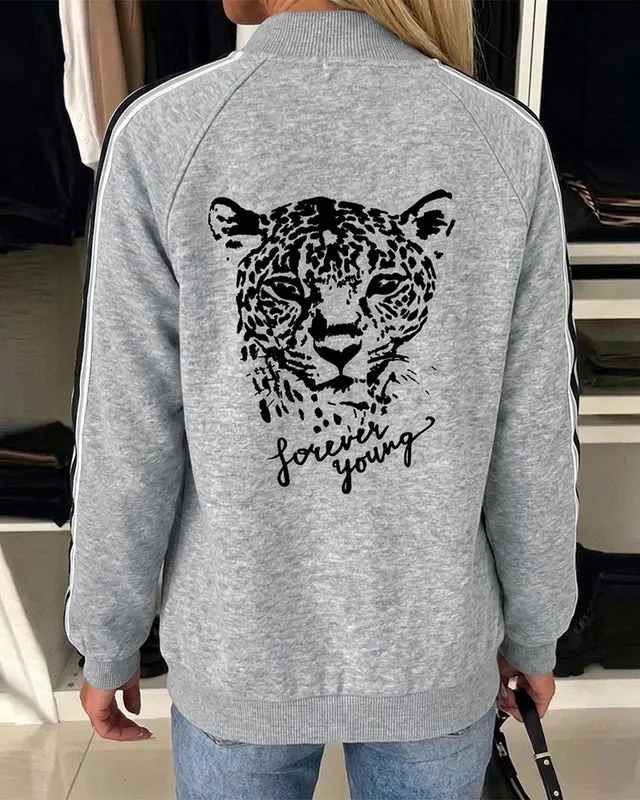

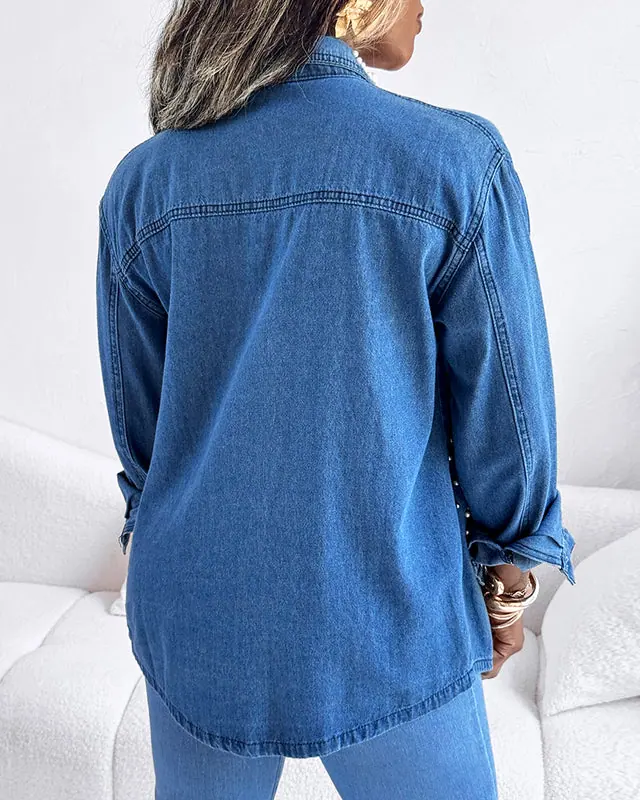





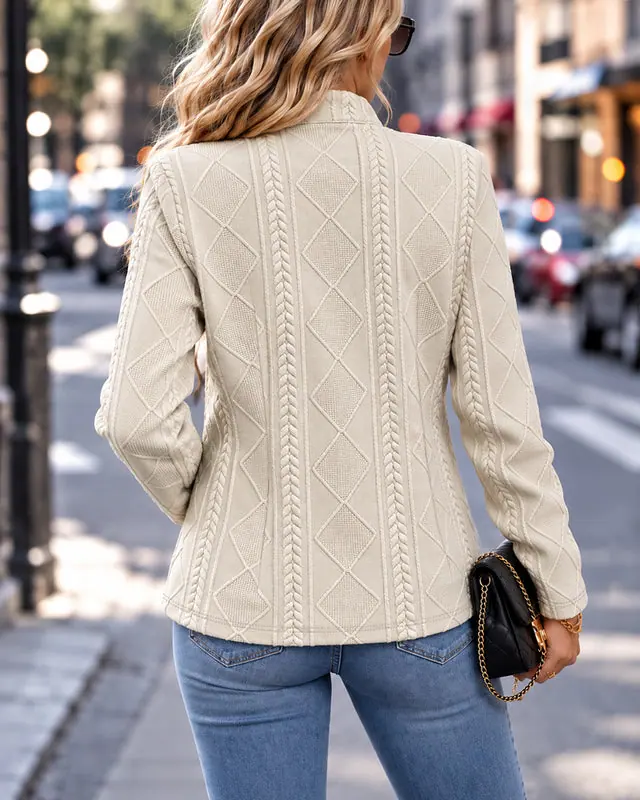


10 pieces from this story — every one links straight to its page.